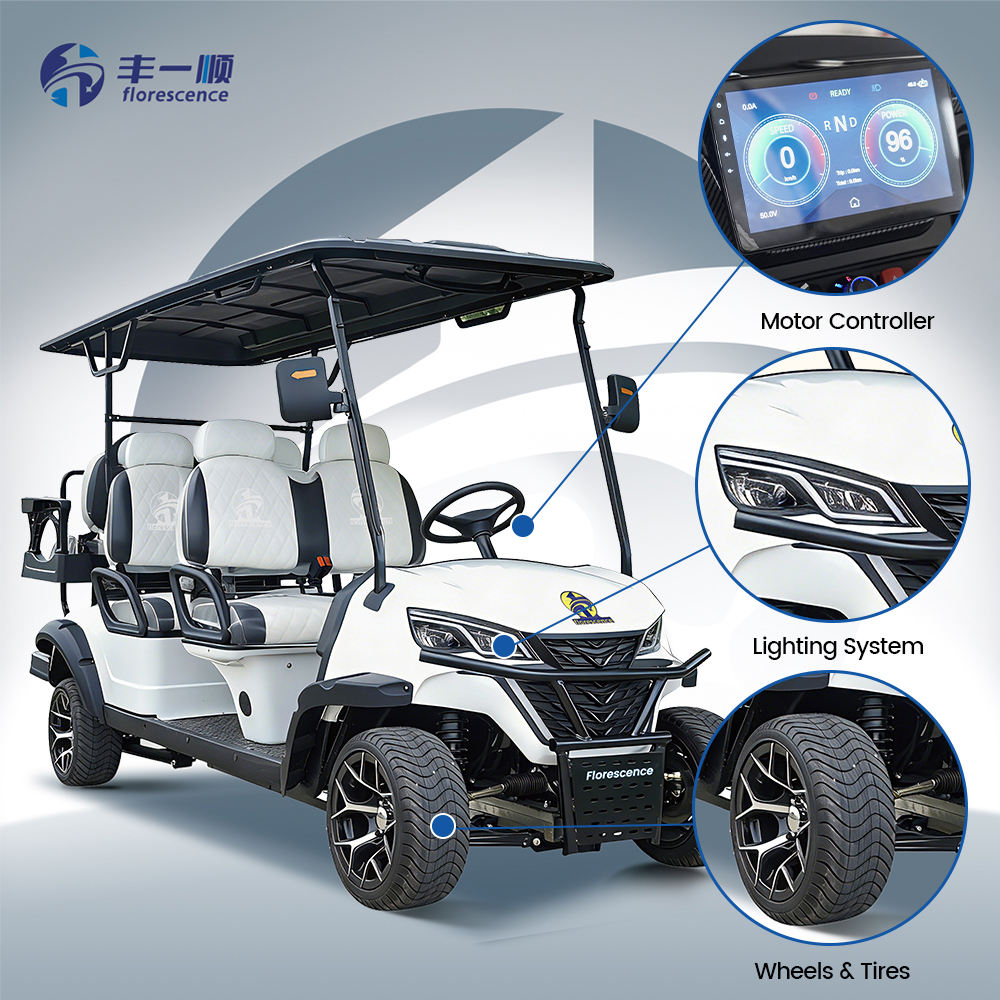
Fleet buyers rarely need more vehicle than the duty cycle demands, and that is exactly the argument for a compact LSEV. On paper this model offers 70-90 km of range per charge; on site, what matters is how those figures hold up across a ten-hour shift with a driver who never switches the motor off.
The guide below follows the order a fleet manager usually works in: understand the platform, check the specification, match it to the site, then decide on the build. Nothing here replaces the factory data sheet — it tells you which lines on that sheet matter.
Manufacturer listing: Customizable Advanced 5KW Motor Lithium Battery Six Seater Electric Golf Cart CE Certification 70-90km Range for Golf Resort — see the full gallery, options and quotation form on the product page.
| Category | Electric Patrol Vehicle |
| Range per charge | 70-90 km |
| Build features | Lithium, Golf Buggy |
| Origin | Zhuhai, Guangdong, China |
What the Electric Patrol Vehicle Golf Buggy is
In the Chinese LSEV market this model belongs to the class sold to operators rather than consumers: buyers are usually site managers, security contractors, resort engineers or procurement teams comparing several factories at once.
What it is not: a highway vehicle. Range, braking distance and crash structure are all engineered for the site speeds it was designed around, and using it outside that envelope is where most operating problems begin.
Specification at a glance
The table below lists the parameters published for this build. Where a figure is not published, the row has been left out rather than estimated — a short table is more useful than an invented one.
| Parameter | Value | Why it matters |
|---|---|---|
| Range per charge | 70-90 km | Compare against the longest daily route plus a 30% reserve, not against the marketing figure. |
| Body configuration | Lithium, Golf Buggy | Determines weather protection, passenger comfort and the resale profile. |
| Charging | On-board charger, mains input | Ask for the input voltage for your market: 110V and 220V builds are both produced. |
| Steering | Wheel steering, left or right hand drive | Right-hand drive matters in the UK, Australia, South Africa and parts of Southeast Asia. |
Figures above are taken from the manufacturer listing for this model. Final data sheets are issued per build, because battery chemistry, controller setting and body length all move with the configuration.
How the drive system works
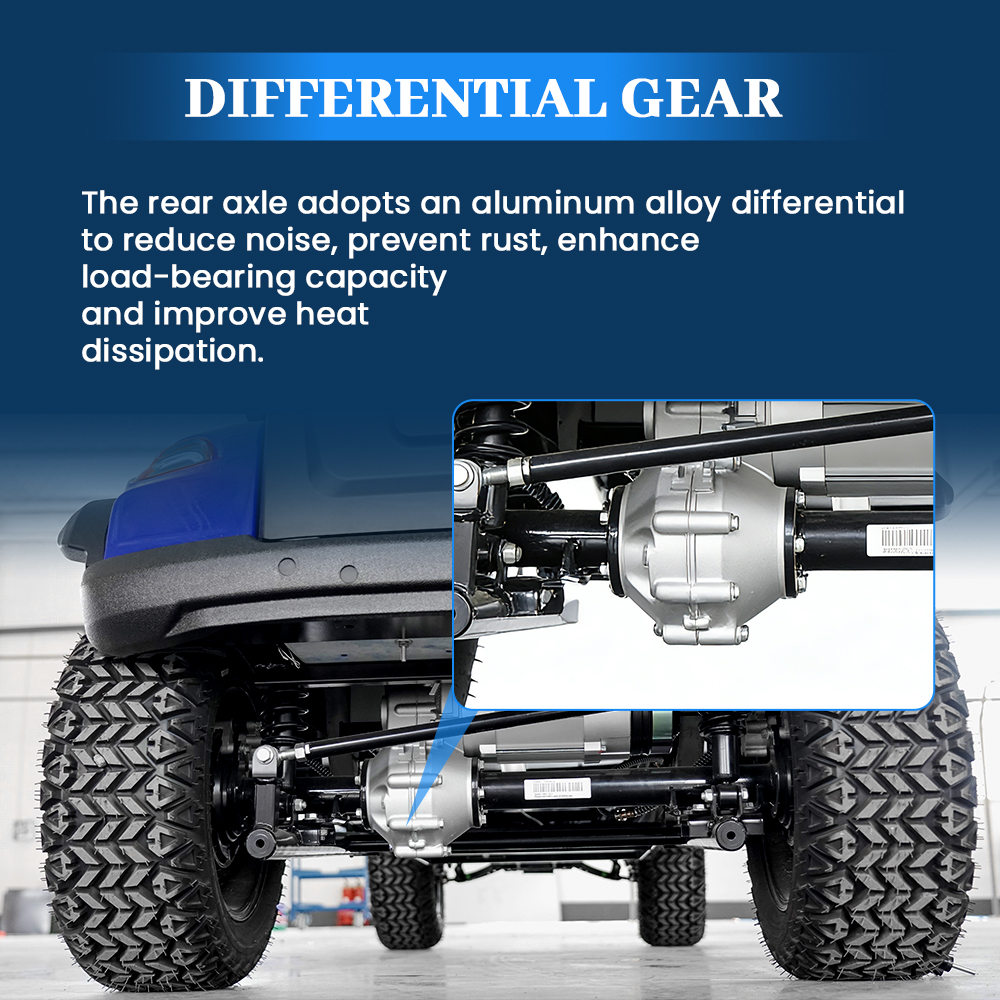
Four subsystems decide how a vehicle of this class behaves: the battery pack, the motor, the controller and the charger. They are matched as a set, which is why swapping one of them without touching the others usually produces a vehicle that is worse than the original.
Battery pack
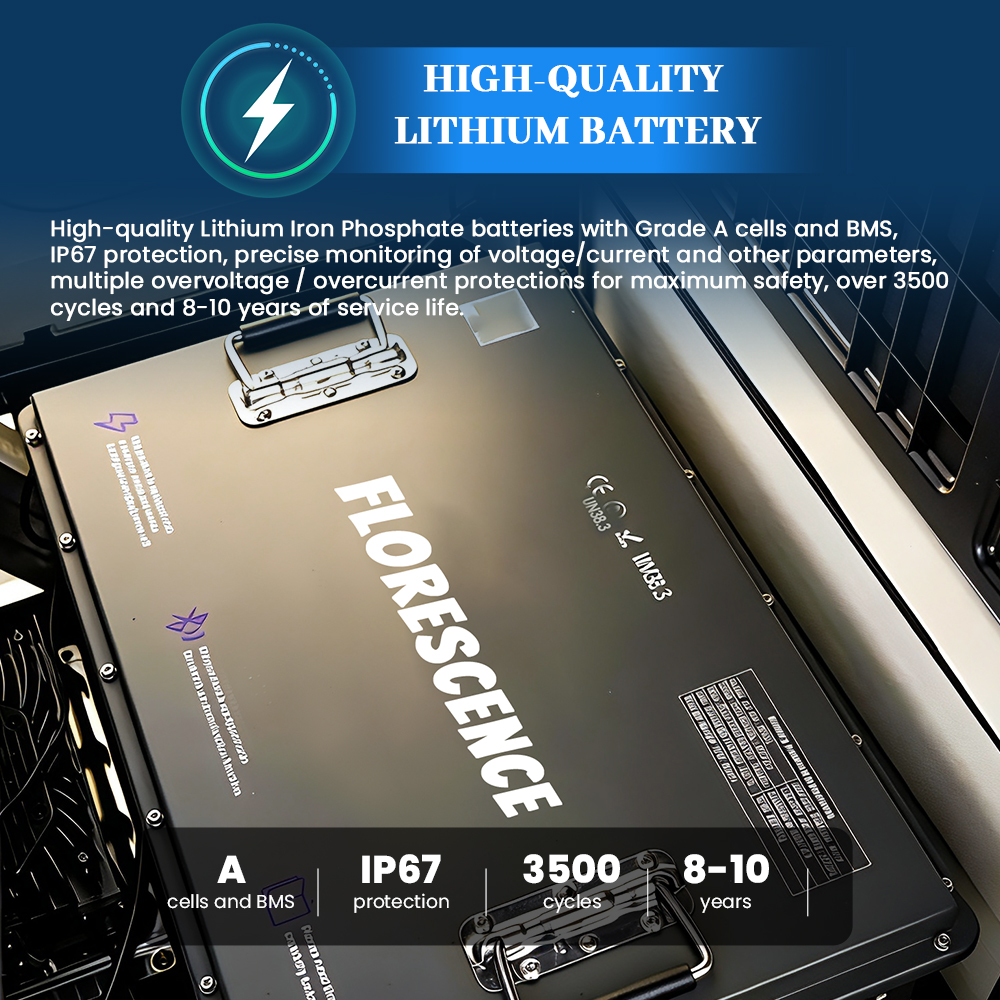
The pack is the single largest cost line in the vehicle, so it is also the first thing buyers try to downgrade. That trade is defensible only if the duty cycle is short and the charging window is long; on a multi-shift site it usually ends in an early replacement.
Motor and controller
Most vehicles in this class use a brushless AC motor paired with a solid-state controller. The controller is where the driving character is set: acceleration ramp, top-speed limit and regenerative braking are all parameters, not hardware. Ask whether those parameters are locked before delivery — an unlocked controller is convenient for a technician and a liability for a fleet.
Charging
Every unit ships with an on-board charger, so the vehicle only needs a mains supply of the correct voltage and a circuit that can carry the charging current for several hours without sharing a socket with anything else. Two practical rules: keep the charging bay ventilated, and size the cable run for continuous load rather than for the charger nameplate alone.
What the voltage figure actually tells you
System voltage is the quiet specification: it decides cable size, controller heat and how much torque the motor can produce at low speed. Buyers comparing two otherwise identical vehicles should compare voltage before comparing price.
Body, chassis and passenger comfort
Operators underestimate comfort at their own cost. A bench that is acceptable for a ten-minute tour becomes a complaint after the fourth hour, and a cab without airflow turns a summer shift into a retention problem. Seat foam density, step-in height and roof shading are the three cheapest upgrades a buyer can specify.
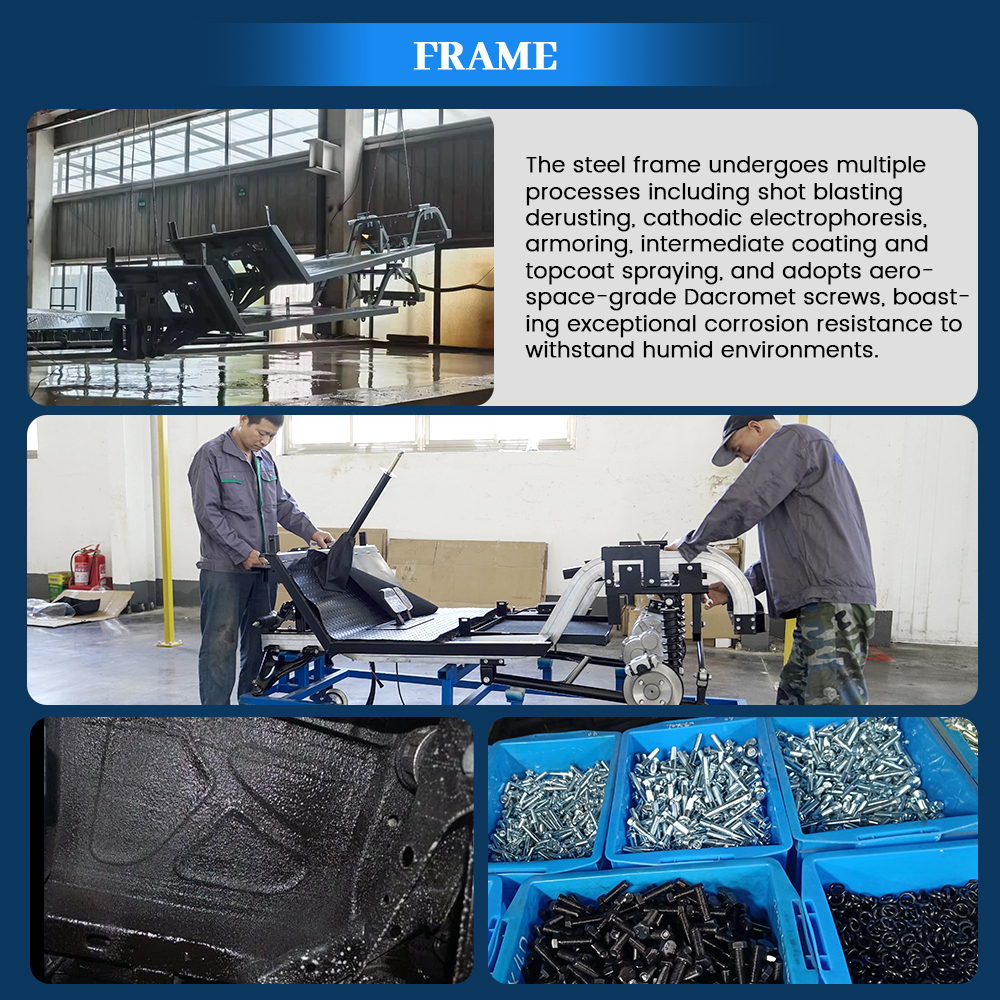
Ask for the frame treatment and the paint system in writing. On coastal sites and in humid climates, that single line in the specification decides whether the vehicle still looks presentable in year four.
Where it fits on site
The same vehicle can be a good decision on one site and a poor one on the next. These are the environments where this configuration is most often deployed, and what each one asks of the build.
Industrial Parks
This is a visibility application as much as a transport one. Livery, lighting and a recognisable silhouette do real work, which is why operators in this segment tend to specify signage, beacons and audio equipment at the same time as the vehicle.
Campus Security
Loads are light but constant, and the vehicle returns to the same bay every night. That pattern suits opportunity charging during breaks and makes a smaller pack economically rational.
Residential Communities
Weather exposure is the main constraint. Enclosed cabins, roof extensions and mudguard coverage are the options that decide whether the vehicle is usable in the rainy season or parked for it.
Airport Perimeters
Staff turnover is high in this segment, so controls that behave like a car — wheel steering, a brake pedal in the expected place, a simple forward-reverse selector — reduce training time and minor damage.
This particular build is listed by the manufacturer for resorts work, which is consistent with the seating and body configuration above.
Customization options
Factories in this segment are set up for small-batch customization, and most of the options below are available from a single unit upward. The items that genuinely change the engineering are marked; the rest are cosmetic or bolt-on and can be decided late.
- Signage and branding panel — Removable side panels for sponsor or departmental livery.
- Cargo box or flatbed ★ — Rear box, pickup bed or tool tray; changes the wheelbase on some builds.
- Lighting and warning equipment — LED headlights, beacon bar, siren and PA, work lights for night duty.
- Tires and suspension — Turf-friendly tires for golf courses, all-terrain tires for gravel and yard duty.
- Battery chemistry and capacity ★ — Lead-acid or LiFePO4, and pack size. This is the option with the largest effect on price, weight and range.
- Right-hand drive ★ — Steering position change for RHD markets — specify before production, not after.
- Roof and weather protection ★ — Hard roof, soft canopy, side curtains, enclosed cabin with doors and wipers.
What to confirm before you order
Most first-order problems are avoidable with a short list of questions. These are the ones worth putting in writing before a deposit, because the answers become the reference point if anything arrives differently.
- Agree the spares kit and the warranty terms — what is covered, for how long, and who pays freight on a claim.
- Ask for the documentation the vehicle ships with: invoice, packing list, certificate of origin, and any compliance certificate claimed.
- Ask which controller parameters are set at the factory and whether they are locked on delivery.
- Ask for the frame treatment and paint system, especially for coastal or humid sites.
- Confirm the battery chemistry, capacity and brand, and whether the pack is serviceable cell by cell.
- Confirm the charger input voltage for your market and whether a spare charger is included.
- Get the production lead time in writing, and the shipping port and terms (FOB, CIF or DAP).
Delivery, compliance and support
Vehicles in this class normally ship as special equipment rather than as passenger cars, packed in a container with the charger and loose parts crated separately. That classification affects the customs documents, the freight rate and, on some routes, the registration route at destination. Confirm the HS code and the certificate of origin with the supplier before the container is booked.
On compliance, ask specifically which certificate number applies to the build you are buying and whether the certificate covers your market. A CE or EEC document issued for one configuration does not automatically cover a different body length or battery chemistry. After-sales support is usually delivered remotely — wiring diagrams, controller fault codes, video guidance and spare parts shipped by air — so it is worth agreeing the response time at quotation stage, in writing.
Frequently asked questions
Q: What does the warranty usually cover?
A: Typically the frame and drivetrain for a defined period, with the battery covered separately and pro-rated by capacity loss rather than by failure alone. Ask for the warranty in writing with the exclusions listed, and confirm who pays freight on a claim — that clause decides whether the warranty is usable in practice.
Q: What is the minimum order quantity?
A: Most factories in this segment quote from one unit, with the price per unit falling as the batch grows because tooling and freight are spread over more vehicles. Mixed containers — several configurations in one shipment — are common and worth asking about if you are buying for more than one site.
Q: How is the vehicle shipped?
A: Usually by sea in a container, partly assembled to fit, with the charger and loose parts crated alongside. Assembly on arrival is limited to fitting wheels, mirrors, seats and the roof where applicable. Air freight is possible for a single urgent unit but rarely economic for a fleet.
Q: What spares should we keep on site?
A: A practical minimum is one charger, one controller, a set of brake parts, lamps, fuses, a spare wheel and a set of fasteners. Sites that keep this kit running report far less downtime than sites that order parts after a failure, simply because the air-freight lead time is removed from the repair.
Q: How long does a full charge take?
A: Charge time is the pack capacity divided by the charger output, plus a taper at the end of the cycle. A pack that runs a full shift will typically need most of an overnight window to reach full charge on the standard on-board charger; higher-output external chargers shorten that but need a supply that can carry the current continuously.
Summary
For a fleet manager, the useful question is not which vehicle is cheapest per unit, but which configuration removes the most downtime over five years. That answer is usually found in the battery, the charger and the spares kit rather than in the price list.
Full specification, gallery and quotation for this model: Electric Patrol Vehicle Golf Buggy. More models in the same range: Electric Patrol Vehicle. For pricing, lead time and customization, use the contact form or message the factory directly on WhatsApp.
Electric Patrol Vehicle Low-speed electric vehicle LSEV OEM / ODM Zhuhai Kaitu