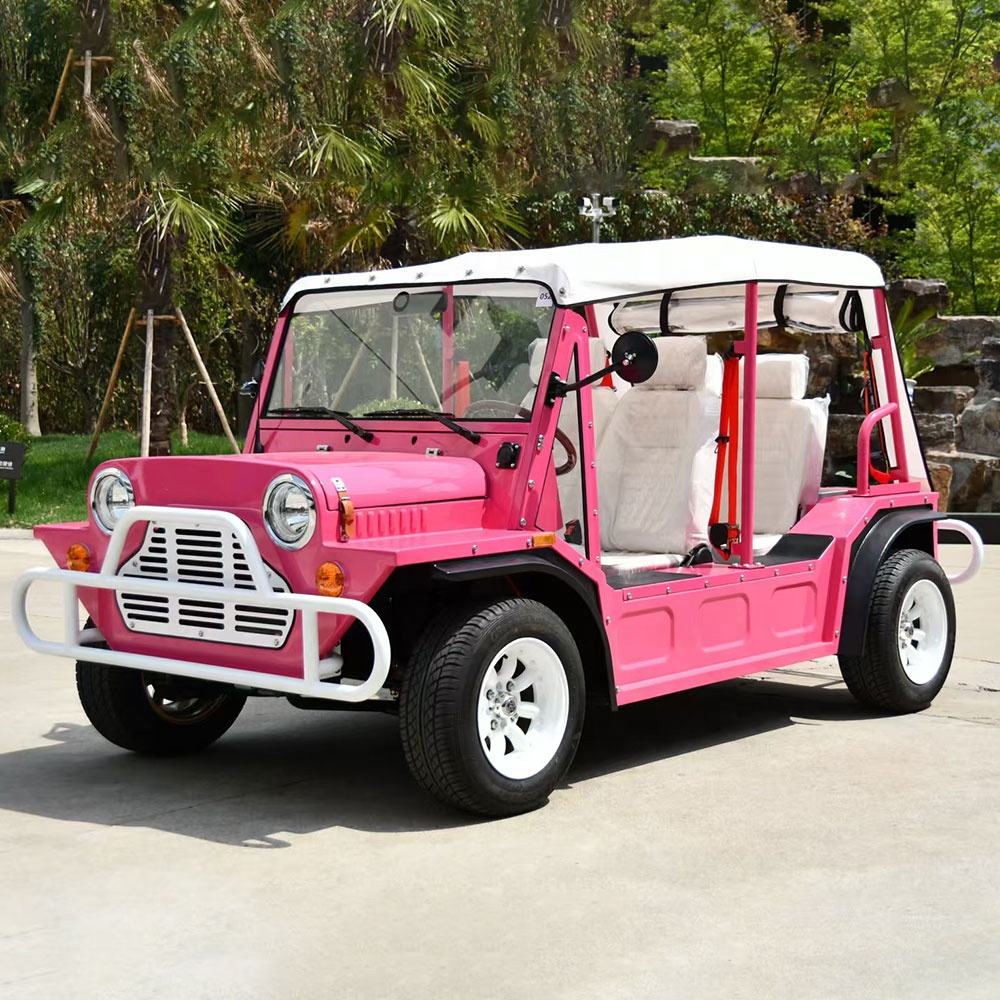
This model is a low-speed electric vehicle built for a working day of short, repeated trips. The published figures for this build read: a 96V electrical system. Everything below explains what those numbers mean in operation, which options actually change the price, and what to confirm before a deposit is paid.
We have kept the language practical: figures first, then interpretation, then the questions to put to the supplier. That is the order in which these decisions are usually made.
Manufacturer listing: Austin Mini Moke 4-Seater Electric Classic Beach Buggy EEC Certified 96V Lithium Battery Low-Speed Vehicle — see the full gallery, options and quotation form on the product page.
| Category | Electric Vintage Sightseeing Car |
| System voltage | 96 V |
| Build features | Street Legal, Vintage Style, Lithium |
| Origin | Zhuhai, Guangdong, China |
What the 96V Electric Vintage Sightseeing Car is
In the Chinese LSEV market this model belongs to the class sold to operators rather than consumers: buyers are usually site managers, security contractors, resort engineers or procurement teams comparing several factories at once.
What it is not: a highway vehicle. Range, braking distance and crash structure are all engineered for the site speeds it was designed around, and using it outside that envelope is where most operating problems begin.
Specification at a glance
The table below lists the parameters published for this build. Where a figure is not published, the row has been left out rather than estimated — a short table is more useful than an invented one.
| Parameter | Value | Why it matters |
|---|---|---|
| System voltage | 96 V | Higher voltage means lower current for the same power, so thinner cabling, less heat and better hill-climbing headroom. |
| Body configuration | Street Legal, Vintage Style, Lithium | Determines weather protection, passenger comfort and the resale profile. |
| Charging | On-board charger, mains input | Ask for the input voltage for your market: 110V and 220V builds are both produced. |
| Steering | Wheel steering, left or right hand drive | Right-hand drive matters in the UK, Australia, South Africa and parts of Southeast Asia. |
Figures above are taken from the manufacturer listing for this model. Final data sheets are issued per build, because battery chemistry, controller setting and body length all move with the configuration.
How the drive system works
Four subsystems decide how a vehicle of this class behaves: the battery pack, the motor, the controller and the charger. They are matched as a set, which is why swapping one of them without touching the others usually produces a vehicle that is worse than the original.
Battery pack
Two chemistries dominate: flooded or AGM lead-acid, and lithium iron phosphate. Lead-acid wins on purchase price and loses on weight, cycle life and charging flexibility. Lithium wins on everything except the invoice, and on a vehicle that runs two shifts a day it usually pays the difference back within two to three years.
Motor and controller
The motor is rated for continuous low-speed duty rather than peak output, which is why the published power figure looks modest next to a passenger car. Thermal headroom, not horsepower, is the number that matters when a vehicle climbs the same ramp forty times a day.
Charging
Every unit ships with an on-board charger, so the vehicle only needs a mains supply of the correct voltage and a circuit that can carry the charging current for several hours without sharing a socket with anything else. Two practical rules: keep the charging bay ventilated, and size the cable run for continuous load rather than for the charger nameplate alone.
What the voltage figure actually tells you
At 96V this build sits in the range where a modest current still delivers useful torque, so the cabling stays manageable and the controller runs cooler than on a 48V equivalent. It also means the charger, the DC-DC converter and the battery pack are all part of one matched set — replacing the pack with a different voltage later is not a plug-and-play job.
Body, chassis and passenger comfort
Two body families dominate: open-sided vehicles for warm climates and short hops, and enclosed cabins for all-weather duty. Enclosed builds add weight, which is why the specification should always be read together with the range figure rather than on its own.
Ask for the frame treatment and the paint system in writing. On coastal sites and in humid climates, that single line in the specification decides whether the vehicle still looks presentable in year four.
Where it fits on site
The same vehicle can be a good decision on one site and a poor one on the next. These are the environments where this configuration is most often deployed, and what each one asks of the build.
Wine Estates
Routes here are short, repetitive and often shared with pedestrians. A governed low-speed vehicle fits the traffic mix better than a van, and the narrow footprint lets it use service paths that were designed for hand carts.
Film Production
The duty cycle is characterised by frequent stops, long idle periods with the motor live, and a driver who leaves the vehicle unattended. Reliability of the controller and the condition of the battery pack matter more here than headline range.
Hotel Transfers
This is a visibility application as much as a transport one. Livery, lighting and a recognisable silhouette do real work, which is why operators in this segment tend to specify signage, beacons and audio equipment at the same time as the vehicle.
Historic Districts
Loads are light but constant, and the vehicle returns to the same bay every night. That pattern suits opportunity charging during breaks and makes a smaller pack economically rational.
This particular build is listed by the manufacturer for island resorts work, which is consistent with the seating and body configuration above.
Customization options
Factories in this segment are set up for small-batch customization, and most of the options below are available from a single unit upward. The items that genuinely change the engineering are marked; the rest are cosmetic or bolt-on and can be decided late.
- Charging accessories — Spare charger, extension leads rated for continuous load, charging post.
- Right-hand drive ★ — Steering position change for RHD markets — specify before production, not after.
- Battery chemistry and capacity ★ — Lead-acid or LiFePO4, and pack size. This is the option with the largest effect on price, weight and range.
- Body colour and livery — Painted panels with customer logos; usually the cheapest way to make a fleet look deliberate.
- Tires and suspension — Turf-friendly tires for golf courses, all-terrain tires for gravel and yard duty.
- Cargo box or flatbed ★ — Rear box, pickup bed or tool tray; changes the wheelbase on some builds.
- Seat layout and trim — Bench, individual seats, vinyl or leatherette, armrests and grab handles.
What to confirm before you order
Most first-order problems are avoidable with a short list of questions. These are the ones worth putting in writing before a deposit, because the answers become the reference point if anything arrives differently.
- Agree the spares kit and the warranty terms — what is covered, for how long, and who pays freight on a claim.
- Ask for the actual data sheet of the exact build you are buying — not the brochure of the series.
- Confirm the battery chemistry, capacity and brand, and whether the pack is serviceable cell by cell.
- Ask for the frame treatment and paint system, especially for coastal or humid sites.
- Ask for the documentation the vehicle ships with: invoice, packing list, certificate of origin, and any compliance certificate claimed.
- Get the production lead time in writing, and the shipping port and terms (FOB, CIF or DAP).
- Confirm the charger input voltage for your market and whether a spare charger is included.
Delivery, compliance and support
Vehicles in this class normally ship as special equipment rather than as passenger cars, packed in a container with the charger and loose parts crated separately. That classification affects the customs documents, the freight rate and, on some routes, the registration route at destination. Confirm the HS code and the certificate of origin with the supplier before the container is booked.
On compliance, ask specifically which certificate number applies to the build you are buying and whether the certificate covers your market. A CE or EEC document issued for one configuration does not automatically cover a different body length or battery chemistry. After-sales support is usually delivered remotely — wiring diagrams, controller fault codes, video guidance and spare parts shipped by air — so it is worth agreeing the response time at quotation stage, in writing.
Frequently asked questions
Q: How do I compare two quotes that look identical?
A: Compare the battery brand and chemistry, the controller make, the frame treatment, the charger input voltage and what is included in the spares kit. Identical-looking quotes usually differ in exactly those five places, and each one moves the real cost more than the headline price does.
Q: Can it be used on public roads?
A: Only if it is built and registered for that use. Low-speed electric vehicles are governed to a low top speed and are generally intended for private roads, campuses, resorts and closed sites. Where public-road use is allowed, the specification changes to include lighting, mirrors, seat belts and a documented speed limit.
Q: How long does a full charge take?
A: Charge time is the pack capacity divided by the charger output, plus a taper at the end of the cycle. A pack that runs a full shift will typically need most of an overnight window to reach full charge on the standard on-board charger; higher-output external chargers shorten that but need a supply that can carry the current continuously.
Q: What licence is needed to drive this vehicle?
A: It depends on the market and on how the vehicle is registered. In many jurisdictions a low-speed electric vehicle used on private land needs no road licence at all, while public-road use triggers registration, insurance and a driving licence requirement. Confirm the local rule before ordering, because the answer can change the specification — lights, mirrors, seat belts and a speed limiter are all part of the road-legal build.
Q: What spares should we keep on site?
A: A practical minimum is one charger, one controller, a set of brake parts, lamps, fuses, a spare wheel and a set of fasteners. Sites that keep this kit running report far less downtime than sites that order parts after a failure, simply because the air-freight lead time is removed from the repair.
Summary
None of the numbers above is unusual for the class. What separates a good purchase from an expensive one is the match between the build and the route it will work, and the discipline of confirming that match on paper before the deposit is paid.
Full specification, gallery and quotation for this model: 96V Electric Vintage Sightseeing Car. More models in the same range: Electric Vintage Sightseeing Car. For pricing, lead time and customization, use the contact form or message the factory directly on WhatsApp.

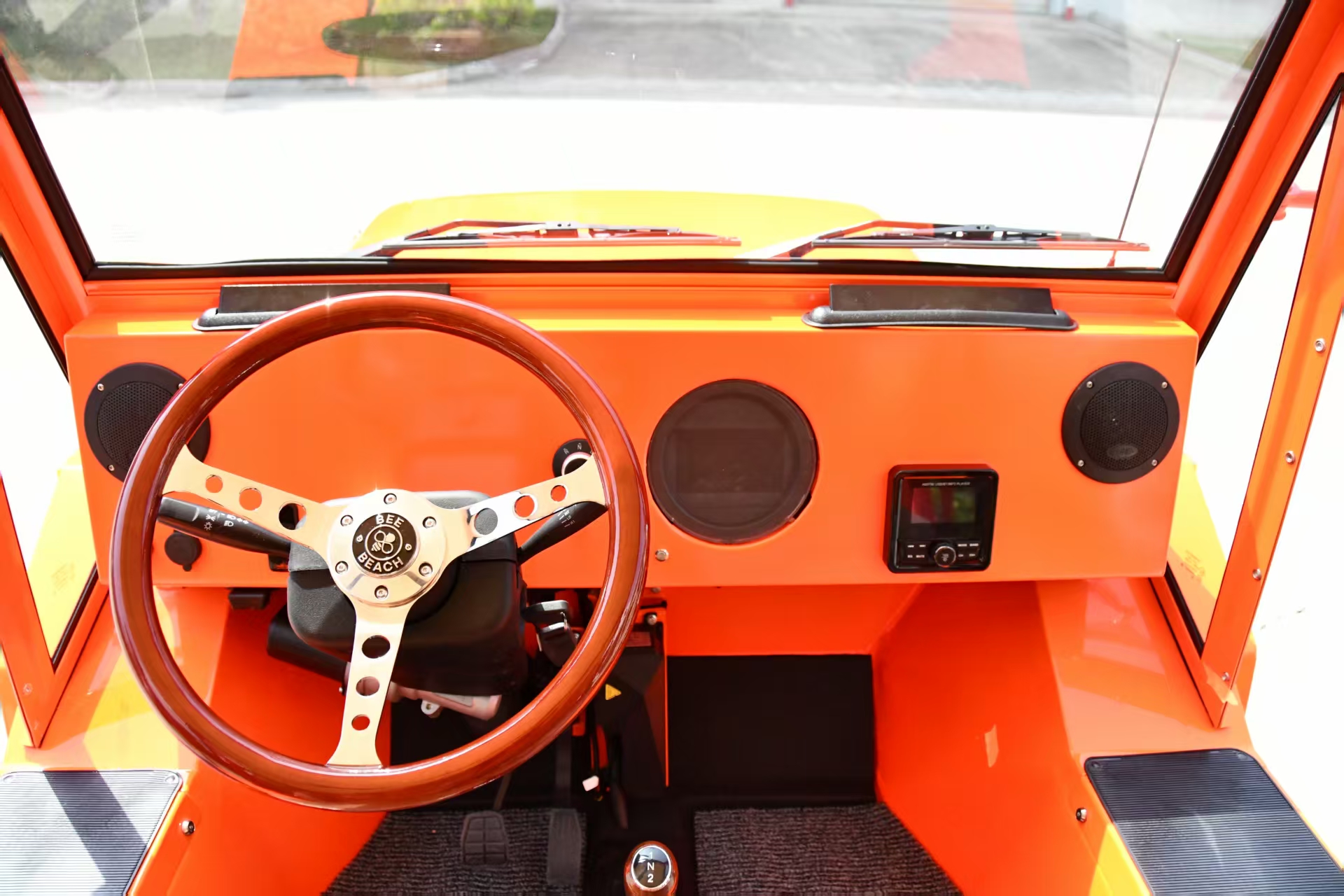
Electric Vintage Sightseeing Car Low-speed electric vehicle LSEV OEM / ODM Zhuhai Kaitu 96V